
 By SN24.com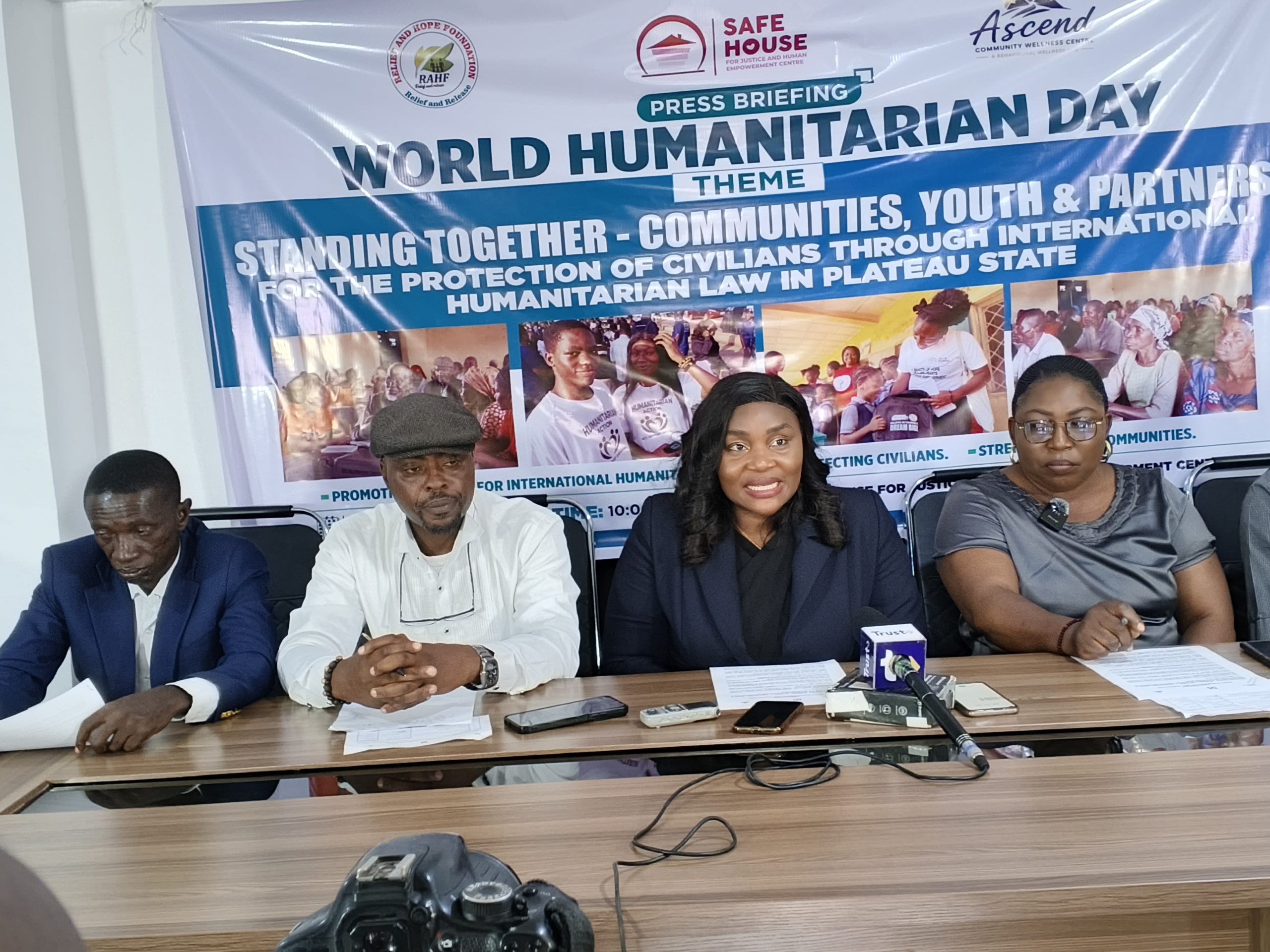
By Peter Akpah.
Civil society organisations in Plateau State have called on government, security agencies and partners to prioritize civilian protection and respect for International Humanitarian Law as the state grapples with more than two decades of recurring violence and displacement.
Speaking at a press conference to mark *World Humanitarian Day 2026* on Tuesday in Jos, *Edith Nankiling Gumut Esq., Executive and Campaign Director, Safe House for Justice and Human Empowerment Centre (SHJHEC)*, said the theme _#ActForHumanity: Standing Together – Communities, Youth & Partners for the Protection of Civilians Through International Humanitarian Law_ must translate into concrete action.*Humanitarian Toll Remains High*Mrs. Gumut said Plateau State “cannot afford to normalize the loss of civilian lives, displacement, destruction of homes and livelihoods.” Citing the 2025 Plateau State Fact-Finding Committee report, she noted that *420 communities across 13 LGAs* have been affected by violence between 2001 and May 2025, resulting in *at least 11,749 reported deaths*.According to recent assessments, *over 65,000 people remained displaced in Plateau as of July 2025*. UNICEF also reported that *160 children were among those killed during 2024 violence*. She added that LGAs including Jos North, Jos South, Bassa, Barkin Ladi, Riyom, Bokkos, Mangu, Wase, Kanam and Qua’an Pan continue to experience attacks, displacement and destruction.Findings from SHJHEC assessments show displaced households face fear of renewed attacks, severe food insecurity, loss of livelihoods, limited healthcare, inadequate water and sanitation, trauma, and risks of gender-based violence. “My children did not choose this life. They want to go to school, but we have lost our home, our farm and our livelihood,” a displaced mother told assessors.
*Calls for Trust, Youth Inclusion and Mental Health Support*
The CSOs stressed that civilian protection requires more than emergency response. It must include mental health and psychosocial support, safe return, livelihood restoration, and community healing.
They also called for stronger trust between communities and security actors. “Transparent communication and mutual respect can help prevent fear and strengthen early warning systems,” Mrs. Gumut said, adding that communities should not be treated as threats for asking legitimate questions about their safety.
In partnership with *Relief and Hope Foundation, Nanmark of the Plateau Peace Practitioners, and Tabitha Hussein Daniel of Ascend Community Wellness Centre*, the groups urged security agencies to act on early warning signs and called on government to hold security personnel accountable where necessary. They further demanded greater investment in youth-led peacebuilding, saying young people must be partners, not just beneficiaries.
*Community Leaders Decry Security Gaps*
Reacting, *Barr. Solomon Dalyop, President, Berom Youth Movement*, said security deployments should focus on vulnerable communities and full resettlement areas. He accused security operatives of arriving only after attacks to “count casualties” instead of pursuing attackers, and called for recognition of community self-defense efforts. “Where government fails to guarantee safety, the people must resort to self-help, otherwise we will all go to extinction,” he said.
*Amb. Ezekiel Peter Bini, National President, Irigwe Youth Movement*, also questioned current security strategy. “For 2 decades they have been operating and applying the same method, and the method doesn’t work,” he said. He urged authorities to review operations and support communities to document attacks, noting that humanitarian aid must also address livelihood recovery beyond token food relief.
The groups concluded with a collective appeal: _“Protect Civilians. Uphold International Humanitarian Law. Strengthen Communities.”_
They said the courage of Plateau communities who continue to rebuild despite violence “demands more than sympathy; it demands action.”