
 By SN24.com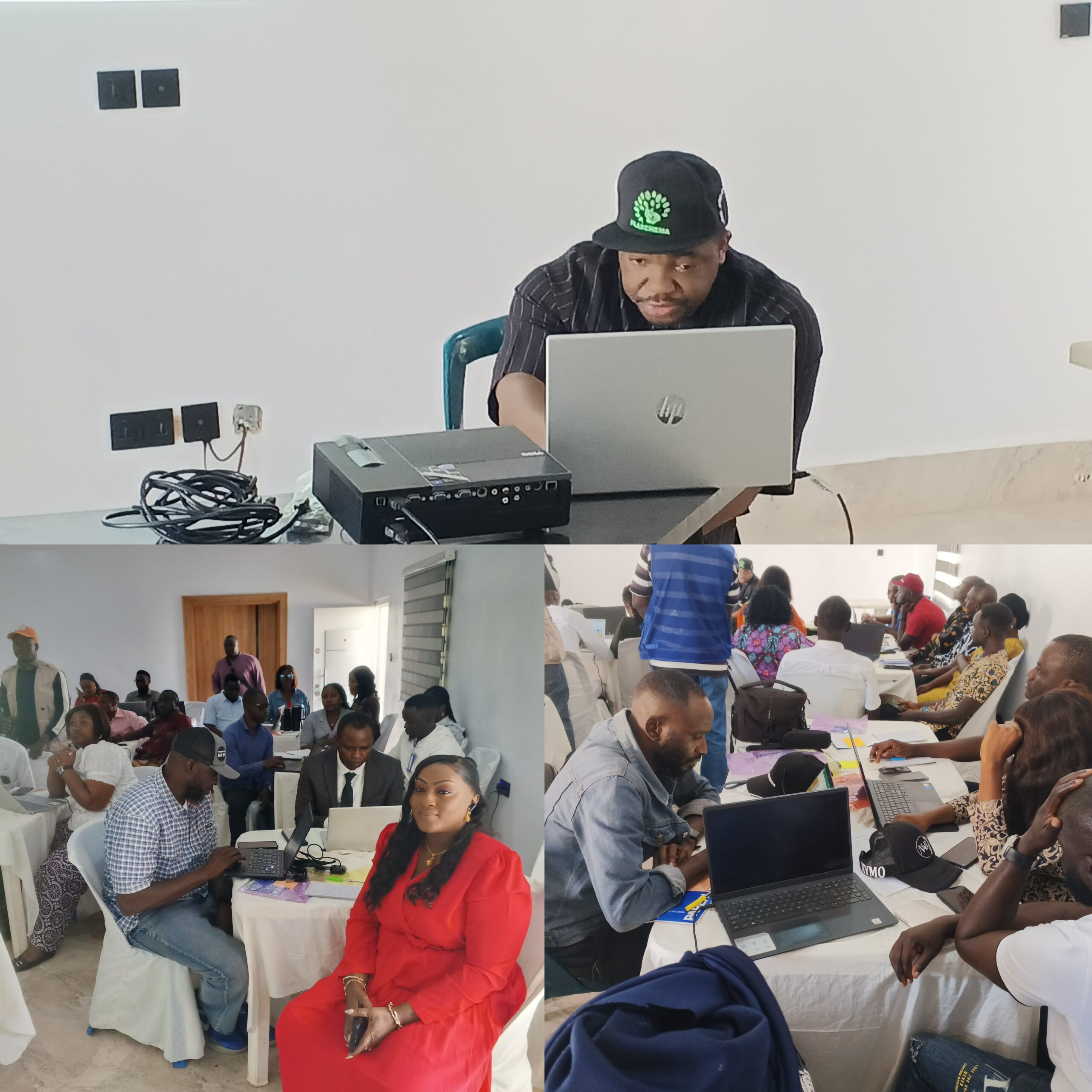
By Peter Akpah.
The Plateau State Contributory Healthcare Management Agency (PLASCHEMA) convened a three‑day retreat in Jos to assess the implementation of its 2025 Annual Operational Plan and to chart the roadmap for 2026. The meeting, held from Monday to Wednesday, brought together senior managers, consultants, and technical staff to align departmental goals, refine strategic objectives, and strengthen inter‑departmental collaboration for the delivery of universal health coverage across the state. Organisers said the retreat is pivotal to ensuring that PLASCHEMA remains responsive to the evolving health‑care landscape in Nigeria, particularly under the Sector‑Wide Approach (SWAP) framework of “one plan, one budget, one conversation.”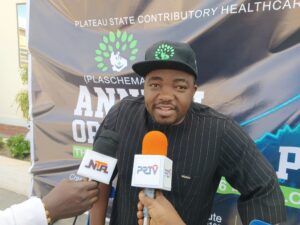
Dr. Julfa Jude Nden, Director of Planning, Research and Statistics at PLASCHEMA, opened the proceedings by outlining the purpose of the gathering. He explained that the retreat is designed to review the agency’s 2025 operational plan, identify gaps, and develop a comprehensive 2026 plan that reflects the agency’s commitment to expanding health‑insurance coverage to all 17 local government areas and every ward in Plateau State. “We develop plans to help us achieve our goals and targets for the year,” Dr. Nden said, adding that the exercise is part of the broader SWAP system adopted by the state.
He provided a brief performance snapshot, noting that the 2025 plan had achieved a 61 % implementation rate, surpassing the typical 50 % benchmark for annual plans. “In 2024 we were at about 51 %,” he said, “but for 2025 we are currently at 61 %, which is very good.” Dr. Nden also highlighted the development of a tracking implementation plan for the upcoming year and announced that facilitators would build staff capacity on annual‑plan development within a one‑month timeline, culminating in a final document to be approved by agency management.
Dr. Nden concluded his remarks by thanking the participants for their dedication and by emphasizing the importance of a structured planning process in a rapidly changing health system. He reiterated that the three‑day workshop would produce a skeletal framework for the 2026 plan and a robust monitoring mechanism to guide implementation throughout the year.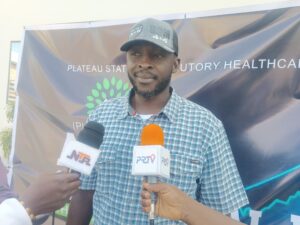
Dr. Solomon Kwakfut, a senior consultant to PLASCHEMA with five years of experience, took the floor to discuss “Optimizing Operational Efficiency and Productivity.” He stressed that health insurance is fundamentally about financial risk protection and that “if you fail to plan, it’s already a plan to fail.” Dr. Kwakfut highlighted the agency’s new decentralisation drive, aiming to extend health‑insurance services to all 17 LGAs and every ward, a goal that hinges on meticulous planning.
He praised the administration of Governor Barr Caleb Manasseh Mutfwang for its unprecedented financial support, noting that the equity fund had already enrolled over 9,000 people, including civil servants, retirees, and rural residents. “Health insurance must reach our grandmothers in the village,” he said, underscoring that the scheme is not a city‑only programme but a statewide commitment. Dr. Kwakfut also pointed out that PLASCHEMA’s coverage currently stands at about 8 % of the state’s population, leaving ample room for growth and the need for sustained political will and community participation.
Reflecting on his tenure, Dr. Kwakfut said PLASCHEMA has evolved into one of the leading health‑insurance agencies in Nigeria, attracting interest from other states. He credited successive leadership—from Dr. Fabon to Dr. Agabus and now Dr. Kwande Solomon Dawal, for steering the agency toward continuous improvement. “We are on an unprecedented trajectory of growth,” he asserted, calling for further planning to raise coverage to 50 % within the next three to four years.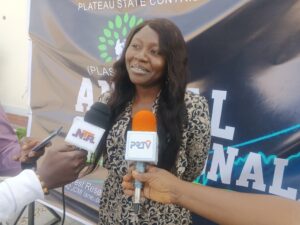
Dr. Zum Bello, a staff member of the Department of Health Services Standards and Quality Control, shared his expectations for the three‑day workshop. He expressed excitement about participating in the review of the 2025 operational plan and the development of a 2026 roadmap. “My expectations are that we will identify challenges, create a clear departmental roadmap, and understand how we can collaborate across units to achieve the agency’s strategic goals,” Dr. Bello said, emphasizing the personal growth and capacity‑building aspects of the event.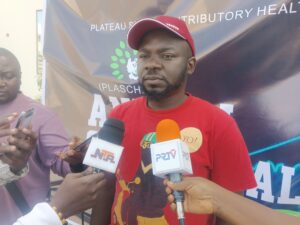
Stephen Sarpiya, Monitoring and Evaluation Officer at PLASCHEMA, highlighted the importance of the retreat for assessing progress and informing future actions. He explained that the review would enable the agency to critically examine whether current activities are delivering results and to adjust strategies accordingly. “We want to understand how far we have come, whether our actions are making an impact, and how we can improve for 2026,” Sarpiya said, echoing the mantra that “he who fails to plan has planned to fail.”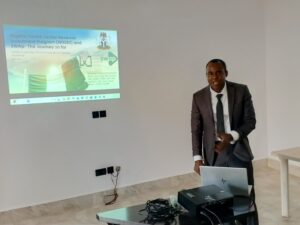
Dr. Kefas Ibrahim delivered a presentation on the Nigerian Health Sector Renewal Investment Program and the SWAP journey so far. He outlined how the program aligns with PLASCHEMA’s objectives, emphasizing the need for coordinated planning, budgeting, and implementation across all levels of government. Dr. Ibrahim’s remarks underscored the broader national context in which PLASCHEMA operates and the agency’s role in advancing the health‑sector renewal agenda in Plateau State.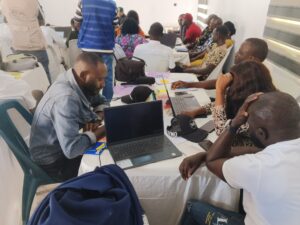
In closing, the retreat concluded with a series of commitments: finalisation of the 2026 operational plan within a month, establishment of a robust tracking and evaluation framework, and a renewed pledge from staff to uphold the agency’s mission of universal health coverage. Participants departed with a shared sense of purpose, confident that the collaborative effort will translate into improved health outcomes for the people of Plateau State.