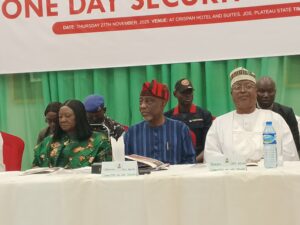
Plateau Hosts North‑Central Security Summit: Lawmakers, Governors and Community Leaders Call for Decisive Action Against Insecurity
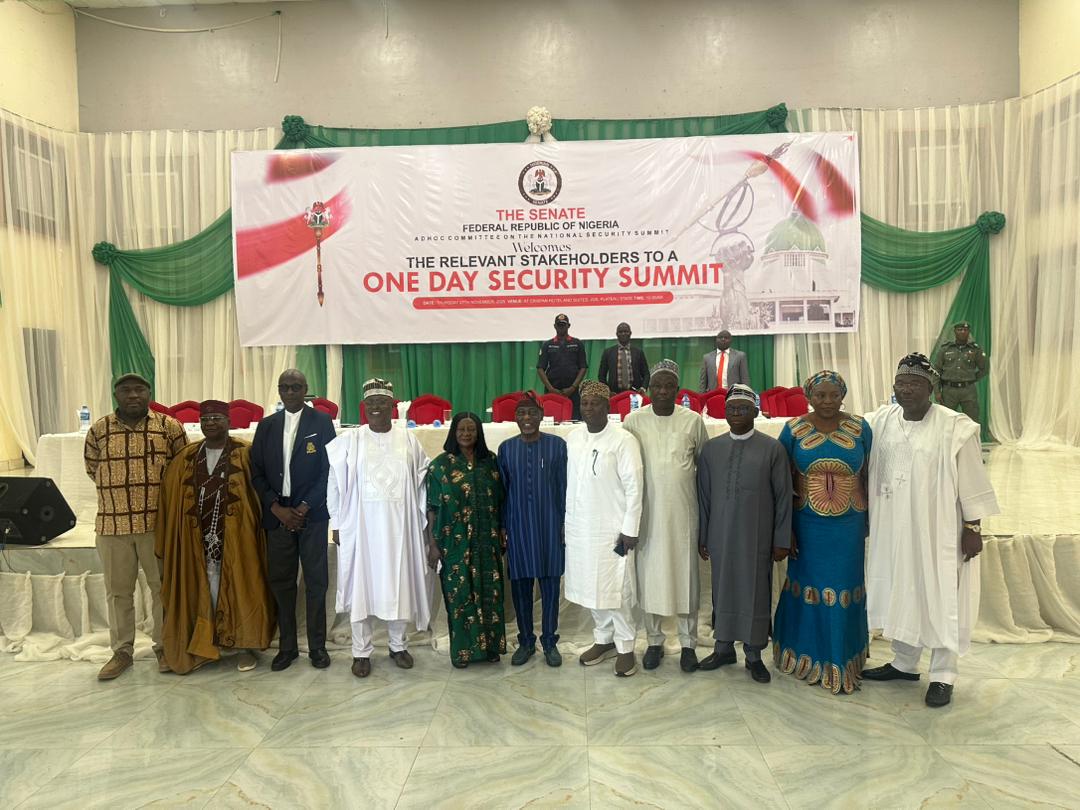
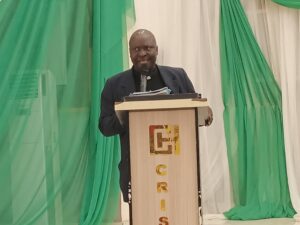
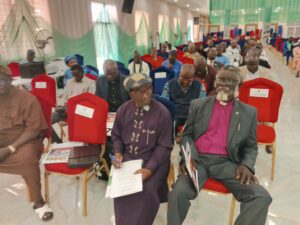
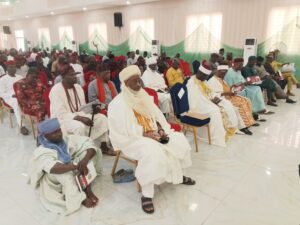
The Senate Ad‑Hoc Committee on the National Security Summit convened its North‑Central Zonal Public Hearing at Crispan Hotel and Suites on Thursday, 27 November 2025. The one‑day summit, chaired by Senator Abba Patrick Moro Senate minority leader and Senator Michael Opeyemi Bamidele, brought together senators, security chiefs, traditional rulers, civil‑society groups and community representatives to identify practical solutions to the surge in banditry, insurgency, kidnapping and farmer‑herder clashes that have plagued the region.
Governor Caleb Manasseh Mutfwang, represented by Deputy Governor Ngo Josephine Piyo, opened the hearing by presenting stark statistics: at least 12,000 residents of Plateau State have been killed and 420 communities attacked between 2001 and May 2025. He described the gathering as “timely” amid a national conversation on “unacceptable levels of insecurity” and lamented that Plateau, once known as the “Home of Peace and Tourism,” now faces an evolving pattern of insurgency and terror that threatens both human life and national security. The governor called for immediate, coordinated action to restore stability and protect citizens.
Mutfwang remarks, Governor Mutfwang emphasized the need for a security architecture that reflects the realities on the ground, urging the Senate to back legislative reforms that enable state and local policing. He highlighted the importance of political will, economic empowerment for youth, and the reinforcement of border controls to curb arms proliferation. The governor’s address set the tone for a series of expert presentations that followed, each focusing on concrete, actionable recommendations to address the crisis.
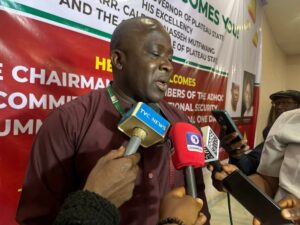
Senator Abba Patrick Moro, Senate Minority Leader and chairman of the North‑Central Security Summit, stressed that identifying and naming any lawmakers who may be sponsoring terrorism is essential to tackling the country’s insecurity. He recalled a presenter’s claim that some senators are involved in terrorism and urged the individual to publicly name those implicated, arguing that silence only perpetuates the problem. Drawing on the National Orientation Agency’s slogan—“If you know something, say something”—Moro said that exposing the truth is a moral duty to the victims of banditry, kidnapping and related violence.
When asked whether he was satisfied with the summit, Moro replied that the gathering’s value lies in the quality, not the quantity, of the opinions expressed by experts, locals and traditional leaders. He noted that the 10th Senate has acknowledged Nigerians’ concerns about lingering insecurity and therefore established the committee to hold a national summit and collect grassroots input. Understanding the specific security challenges in Plateau, Benue, Niger, Kwara and other states, he said, is a crucial step toward formulating a national security policy and moving from discussion to actionable solutions.
The president of the Berom Educational and Cultural Organization (BECO), Da Gyang Dudu Dalyop who represented the chairman PIDAN, delivered a forceful appeal for constitutional reform that would grant state governors full authority over security matters. He argued that “political will—not political correctness—is critical to ending the killings” and warned against profiling communities, stressing that all Nigerians, regardless of religion or ethnicity, deserve protection. Dalyop called for the establishment of state police service commissions, enhanced training institutions and modern anti‑terrorism capabilities for the National Police Service.
Gyang Dudu also highlighted the need to re‑motivate security forces, deploy advanced technology and withdraw police personnel from VIP escorts to strengthen community‑level policing. He urged the Senate to ensure that the recommendations from the summit translate into tangible actions, warning that repetitive consultations without implementation would erode public trust. His presentation underscored the urgency of empowering governors to secure lives and property across the North‑Central zone.
Engr. Prof. Stephen J. MALLO, President of the Bokkos Cultural Development Forum, presented a detailed account of the insecurity crisis in Bokkos Local Government Area. He reported that, between 2001 and 2025, 783 people had been killed, 689 injured, 101 women raped and over 25,800 assets destroyed, describing the violence as a “calculated genocide.” MALLO called for an independent forensic inquiry into the killings, the restoration of displaced persons to their ancestral lands and the profiling of Fulani newcomers to curb infiltration.
In his second paragraph, MALLO demanded that the Fulani be directed to vacate forcefully seized indigenous lands, allowing internally displaced persons to return. He also urged the federal government, in collaboration with local hunters and forest guards, to comb the rocky mountains and hills that have become armories for kidnappers and bandits, and to establish surveillance points along border corridors to stop the flow of arms and foreign mercenaries.
Finally, MALLO outlined five specific demands: profiling of Fulani ethnic nationalities to monitor influx; evacuation of seized lands; profiling and evacuation of arms from traditional worship sites; establishment of surveillance points on critical border corridors; and an independent forensic investigation with appropriate compensation for victims. He concluded by thanking the Senate committee for its attention and expressed hope that the summit would lead to decisive, action‑backed outcomes.
Also speaking emotionally, Rev. Ezekiel Dachomo urged lawmakers to prioritize the restoration of lands and resettlement of displaced villages, recounting personal losses suffered from violent attacks.
Rev Dachomo maintained his stand on the ongoing genocide, emphasizing he had supporting evidence to prove it but however urged that the earlier the realities are accepted, the earlier solutions will be reached.
Rev. Dr. Gideon Para‑Mallam offered seven high‑impact proposals to overhaul Nigeria’s security, chiefly calling for a decentralized architecture that permits national, state, local and community policing, constitutional reforms to create state police service commissions and oversight committees, stronger police training schools, and modern anti‑terrorism equipment for the National Police Service.
Dr. Godwin Okoko of the BEGE Foundation cautioned the Senate against endless consultations without implementation, backed the recent state‑of‑emergency declaration, and called for re‑energizing security forces, deploying advanced technology, ending VIP‑escort duties for police, and translating summit recommendations into concrete actions, emphasizing that Nigerians want real change, not just rhetoric.
The hearing concluded with a consensus that lasting security in the North‑Central region will require constitutional reforms, empowered state leadership, community‑centric policing and a commitment to translate recommendations into concrete measures. The Senate Ad‑Hoc Committee pledged to deliberate on all submissions and to follow up with legislative action aimed at restoring peace and stability across Nigeria.
Peter Akpah is an investigative journalist/Blogger a public affairs commentator, social media influencer, content creator and a chess player., studied journalism at MANCAT, Digital journalism with Router, attend many capacity building training on journalism and blogging.

 By SN24.com