
 By SN24.com
 By Peter Akpah.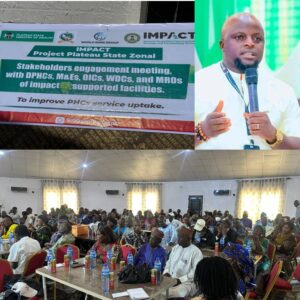
*Jos, Plateau State –* On Thursday, 4 December 2025, the Immunization Plus and Malaria Progress by Accelerating Coverage and Transforming Services (IMPACT) project convened a high‑level stakeholder engagement at Villa Grande Hotel, Jos. The meeting gathered Directors of Primary Health Care, Monitoring and Evaluation Officers, Officers‑in‑Charge, Ward Development Committee (WDC) chairpersons, and Medical Record Officers from the 207 IMPACT‑supported health facilities across Plateau State. The agenda focused on reviewing progress, identifying gaps, and strengthening interventions aimed at improving maternal, newborn, and child health outcomes.
Nurse Ndak Kizito Zuhumnan, IMPACT Programme and Project Manager for Plateau State, explained that the forum was designed to assess key health indices, particularly treatment coverage for children under five, antenatal clinic attendance, and the persistence of home deliveries. He highlighted low antenatal attendance, poor facility‑based delivery rates, and delays in newborn immunization as critical concerns. Kizito underscored the pivotal role of WDCs in community mobilisation through churches, mosques, and local gatherings, and announced that essential commodities—including delivery kits, malaria rapid‑diagnostic tests, artemisinin‑based combination therapies (ACTs), and IPT3 for malaria prevention in pregnancy—are now available free of charge at all participating primary health centres.
John Ajang Izang, Chairman of the WDC for Jos Jarawa PHC, praised the tangible improvements attributed to the IMPACT project, citing renovated facilities, solar‑powered infrastructure, and the provision of free “baby packs” by the Governor that have made PHC deliveries both free and attractive. He noted that the drug‑revolving scheme has ensured a steady supply of affordable, quality medicines. Linda Chuwang, Director of Primary Health Care in Barkin Ladi LGA, described the meeting as timely, drawing attention to facilities still awaiting revitalisation and calling for accelerated completion of pending upgrades to create clean, welcoming environments that encourage antenatal and delivery services.
Helen Damo, Director of Primary Health Care in Riyom LGA, stressed the importance of robust data‑reporting systems, asserting that accurate data directly influences state‑level health indicators. Benjamin Daniel Shankom, Monitoring and Evaluation Officer for IMPACT, highlighted the project’s reach—207 facilities across the state—and the role of WDCs as grassroots liaison agents in driving service uptake. Other participants, including Chief Benaya Obiaboso (Jenta Apata) and Choji Nyam (Township PHC), acknowledged the progress made but urged additional staffing to meet rising demand.
The engagement concluded with a renewed commitment from all stakeholders to intensify community sensitisation, improve service quality, and ultimately reduce infant and maternal mortality in Plateau State to the lowest possible level.